
Summary
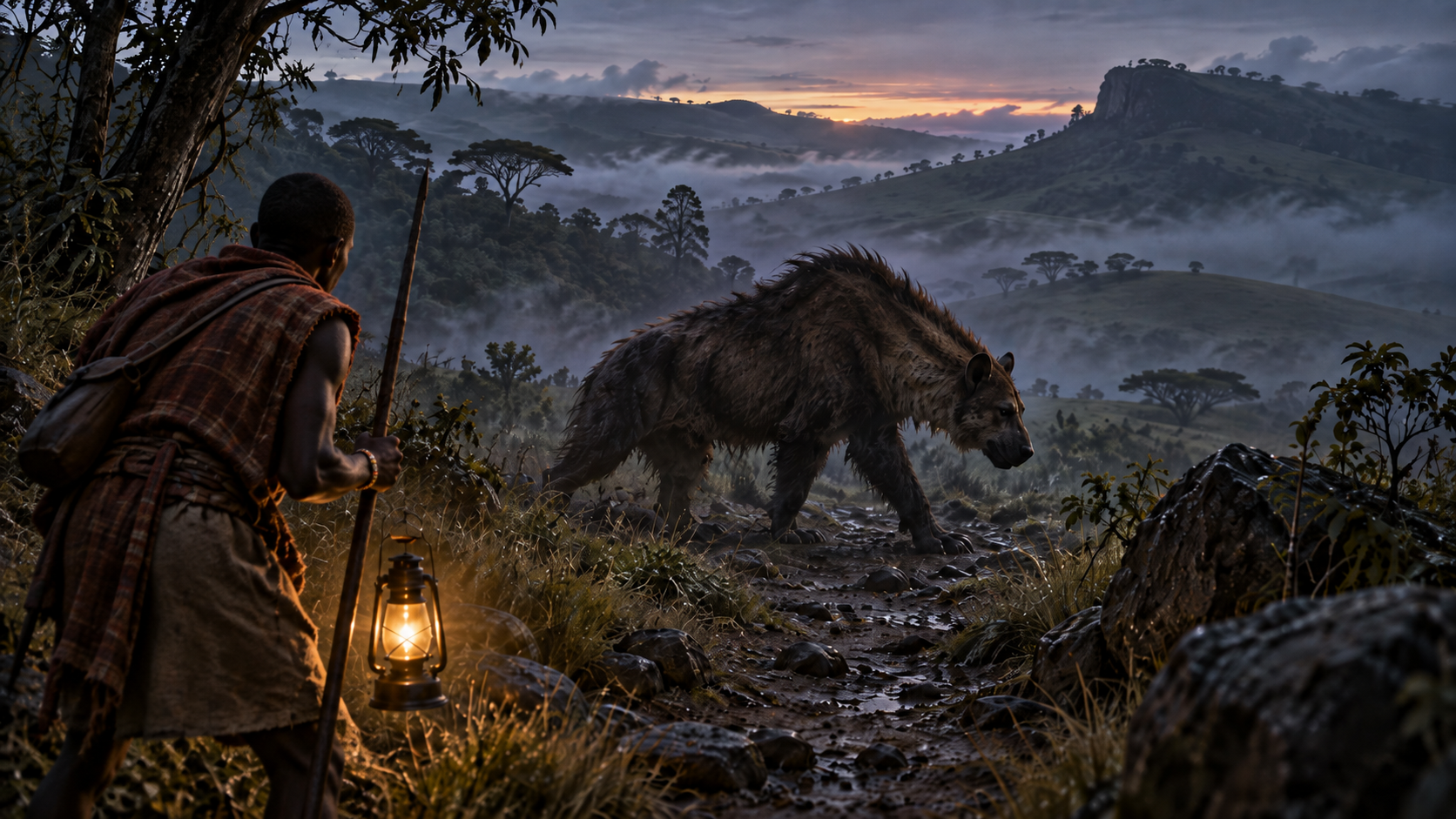
For decades, western Kenya’s Nandi Hills and surrounding highlands were associated with reports of a powerful, bear-like predator known locally as the Chemosit or Kerit. Witnesses described a heavily built animal with a large head, strong jaws, shaggy dark or reddish fur, high forequarters and a sharply sloping back. Several colonial officials, hunters and residents claimed close encounters during the early twentieth century, while local traditions attributed livestock killings and occasional human attacks to the same creature. Despite repeated reports, tracks and several animals being shot and proposed as candidates, no specimen has ever been conclusively identified as the legendary Nandi Bear.
Additional Notes
The Nandi Bear is closely associated with the Nandi people of western Kenya, where traditions describe a dangerous nocturnal animal known as the Chemosit or Kerit. Accounts often portray it as a powerful predator capable of attacking livestock and sometimes people, with a body shape unlike the familiar carnivores of East Africa. One of the earliest widely recorded encounters occurred in 1905, when Geoffrey Williams reported seeing a large animal in western Kenya. He described it as heavily built and bear-like, with a long head and unusual gait. The account became one of the foundations of the later Nandi Bear literature. In March 1913, District Commissioner N. E. F. Corbett reported encountering a strange animal at very close range near the Sirgoi River. He said the creature had apparently been drinking when he approached and then moved away with a shambling gait into the bush. Other reports followed from colonial administrators and experienced hunters. Captain F. D. Hislop described a dark grey, compact and powerful-looking animal moving beside a road near forest, while later observers compared the creature’s gait and posture to that of a bear despite Kenya having no native bear species. Tracks were also occasionally attributed to the animal. One colonial-era report describes unusually clear spoor with six apparent digits, while other witnesses mentioned broad, bear-like footprints. These traces were never linked conclusively to an unknown species. The Nandi Bear was also blamed for attacks on livestock and, in some accounts, people. One of the more dramatic episodes involved a child said to have been killed by a Kerit, after which investigators examined tracks near the scene. Such reports contributed heavily to the creature’s fearsome reputation. Reports continued into the mid-twentieth century. In the late 1950s, two unusual animals were reportedly shot on a tea estate in the Nandi Hills and later described as heavily built, sloping-backed carnivores. Their remains were subsequently identified as “giant forest hyenas,” although the episode remained part of the Nandi Bear tradition.
The Location Today
The Nandi region remains a mixture of settlements, farms and upland landscapes. Accounts of the Chemosit or Nandi Bear refer to scattered localities, not a confirmed public encounter site.
- Environment
- Forest, Village / Rural Area, Highland
- Time of Day
- Various, often dusk / night
- Evidence Level
- Investigated Case
- Visiting the Location
- Unknown
- Ownership of the Location
- Unknown