
Summary
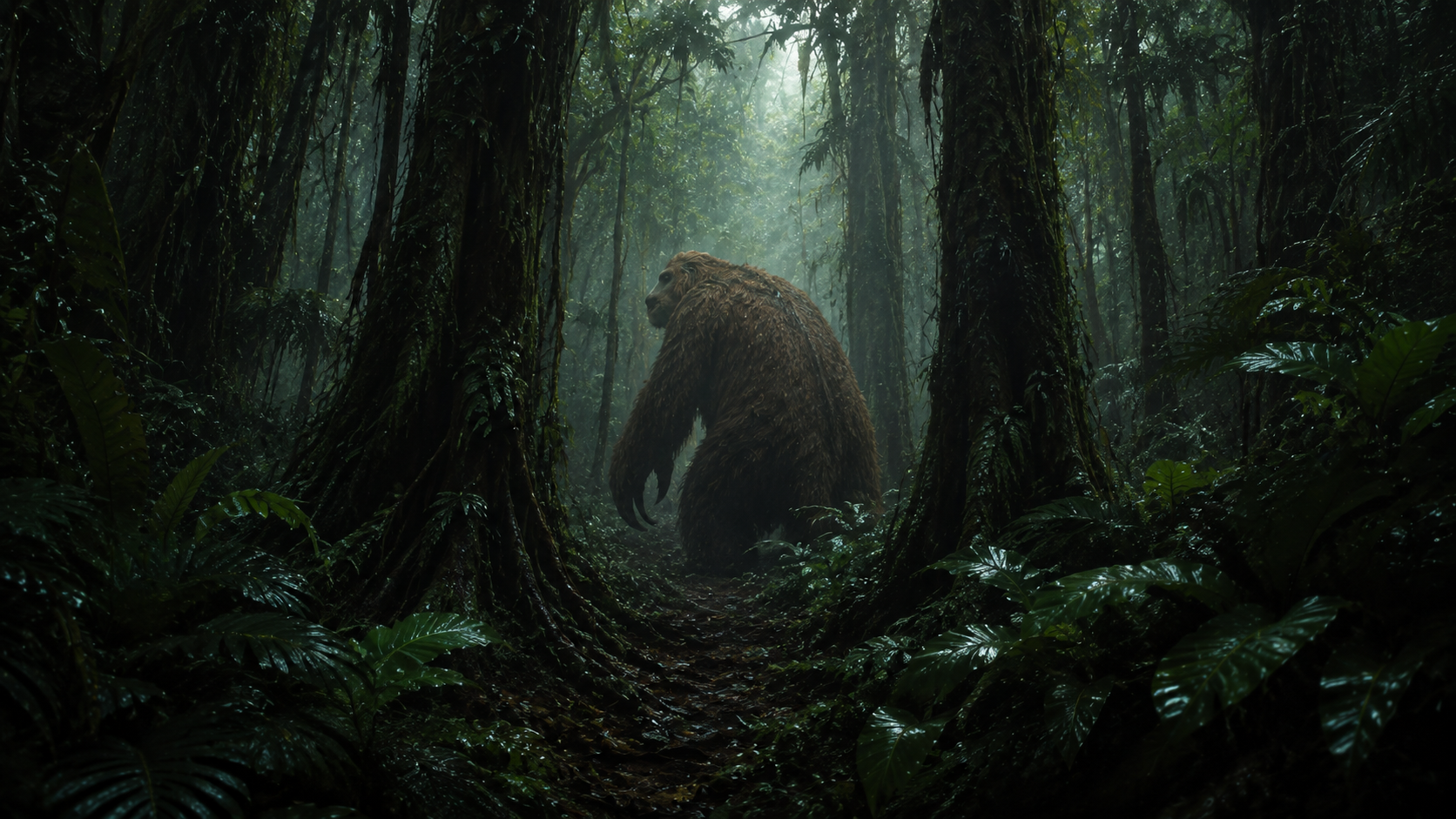
The remote forests of Acre in western Brazil are among the regions most strongly associated with modern reports of the Mapinguari, a large and mysterious creature from Amazonian tradition. Witness descriptions vary considerably, but commonly include a powerful, heavily built animal covered in reddish or dark hair, capable of standing upright and producing an extremely strong odor. During the late twentieth century, reports from Acre and neighboring Amazonian regions attracted scientific attention after ornithologist David Oren proposed that some accounts might describe a surviving relative of the extinct giant ground sloths.
Additional Notes
Mapinguari traditions are considerably older than modern cryptozoological investigations and occur in different forms throughout the Amazon. Accounts vary between Indigenous traditions and later reports from hunters, rubber tappers and other forest workers. Some folkloric versions describe supernatural features, while modern eyewitness accounts often portray a large terrestrial animal with heavy fur, powerful claws and a penetrating odor. Reports connected with Acre were already circulating by the 1960s. One account recorded at that time stated that workers clearing a road intended to connect Acre with Brasília had encountered an animal identified locally as a Mapinguari. During later decades, additional stories were collected from hunters and forest inhabitants in western Amazonia. Scientific interest increased through the work of ornithologist David Oren of the Museu Paraense Emílio Goeldi. After initially regarding the Mapinguari purely as folklore, Oren began interviewing people who claimed direct encounters and examining reports of tracks, feces and damage to vegetation. In a 1993 publication, he suggested that some descriptions might be compatible with a surviving form of giant ground sloth and specifically identified Acre and Amazonas as possible remaining refuges. No living specimen or verified biological material has ever confirmed this hypothesis. The ground-sloth interpretation remains controversial. Traditional descriptions of the Mapinguari are highly variable and sometimes include obviously supernatural characteristics, while known giant ground sloths are considered extinct. Skeptical explanations include encounters with bears, tapirs, anteaters or other Amazonian wildlife, together with folklore and the difficulty of identifying animals in dense tropical forest. Today the Mapinguari remains an important part of Amazonian folklore, particularly in states such as Acre, Amazonas, Rondônia and Pará. In Acre it has also become a recognizable cultural symbol, appearing in local artistic representations and retellings of regional legends.
The Location Today
Acre remains an Amazonian state with settlements, forests, protected areas and Indigenous territories. Mapinguari reports refer to dispersed forest locations rather than an established public visitor site. Access varies widely across the region.
- Environment
- Forest, River, Swamp / Marsh
- Time of Day
- Various
- Evidence Level
- Witness Report
- Visiting the Location
- Limited
- Ownership of the Location
- Unknown