
Summary
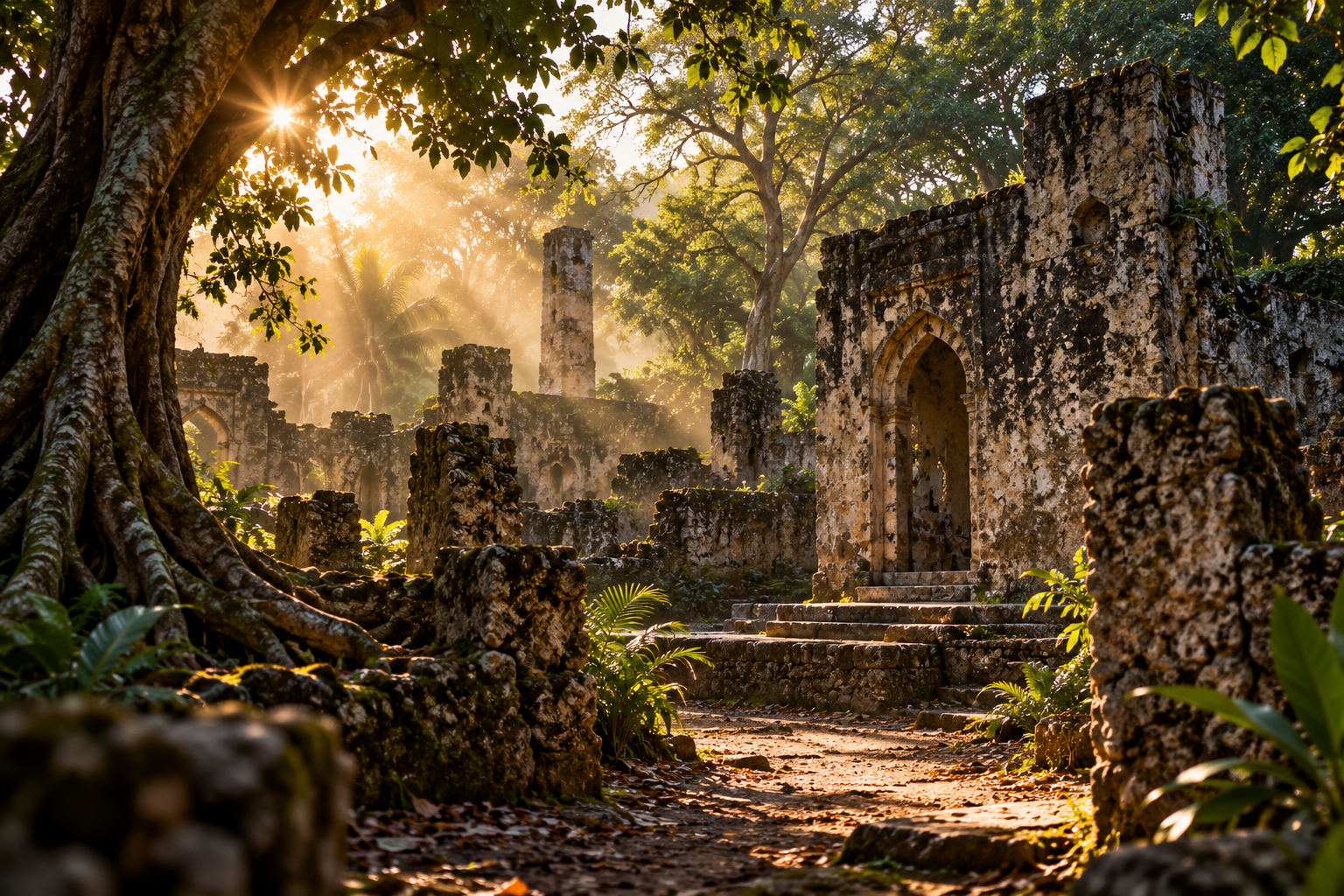
Hidden within a coastal forest in Kenya, the abandoned Swahili city of Gedi is surrounded by traditions of ancestral spirits and unseen guardians. Local beliefs associate the ruins with supernatural beings, including jinn, while stories warn that disturbing the ancient site may provoke spiritual consequences. Once a prosperous trading settlement, Gedi was abandoned during the seventeenth century, leaving behind mosques, tombs, houses, and a palace. The ruins remain spiritually significant to surrounding communities, particularly the Giriama. Although individual paranormal encounters are not reliably documented, the traditions of invisible guardians continue to give Gedi an atmosphere of mystery.
Additional Notes
Deep within the coastal forest of Kilifi County stand the remains of Gedi, a once-prosperous Swahili settlement whose abandoned streets have become closely associated with stories of ancestral spirits and supernatural guardians. Between the tenth and seventeenth centuries, Gedi developed into an important centre connected to Indian Ocean trade. Its inhabitants constructed substantial coral-stone buildings, mosques, tombs, wells, and an elaborate palace complex. Imported objects from distant trading regions reveal the wealth and international connections of the settlement. By the seventeenth century, the city had been abandoned. Its decline has been associated with several historical possibilities, including political instability, regional conflict, and changing environmental conditions. No single explanation fully accounts for every aspect of its history. For surrounding communities, however, Gedi never became merely an empty collection of walls. Among the Giriama, who belong to the wider Mijikenda cultural group, the ruins have long held spiritual significance. Traditional beliefs connect the site with ancestral spirits and jinn, supernatural beings recognised within the religious traditions of the region. Some accounts describe the ruins as protected by the spirits of former religious figures, with misfortune awaiting those who damage or disrespect the ancient structures. These traditions are part of a living cultural landscape rather than simply modern ghost stories created for visitors. Research published in 2012 examined the relationship between Gedi, local spiritual beliefs, and the surrounding Giriama community, including the possible role of these beliefs in preserving the archaeological site. Popular descriptions sometimes portray Gedi as a haunted city where visitors encounter mysterious voices or invisible presences. However, specific incidents involving identifiable witnesses, dates, and independently verifiable testimony remain insufficiently documented. Today, the deserted passageways, weathered tombs, and forest-covered walls preserve both the physical remains of a remarkable civilisation and the traditions of unseen guardians said to watch over it.
The Location Today
The Historic Town and Archaeological Site of Gedi was inscribed on the UNESCO World Heritage List in 2024. Its surviving structures and surrounding coastal forest are protected as an important archaeological and cultural landscape. Local spiritual traditions remain part of the site's cultural significance. The Gedi Ruins are an accessible archaeological heritage site near Gedi village, approximately 16 kilometres south of Malindi, in Kilifi County, Kenya. Visitors can explore the remains of the ancient Swahili town, including its mosques, palace, houses, tombs, and surrounding forest.
- Environment
- Forest, Coast / Beach, Archaeological Site
- Time of Day
- Unknown times of the day
- Evidence Level
- Folklore
- Visiting the Location
- Ticketed, Guided
- Ownership of the Location
- Public