
Summary
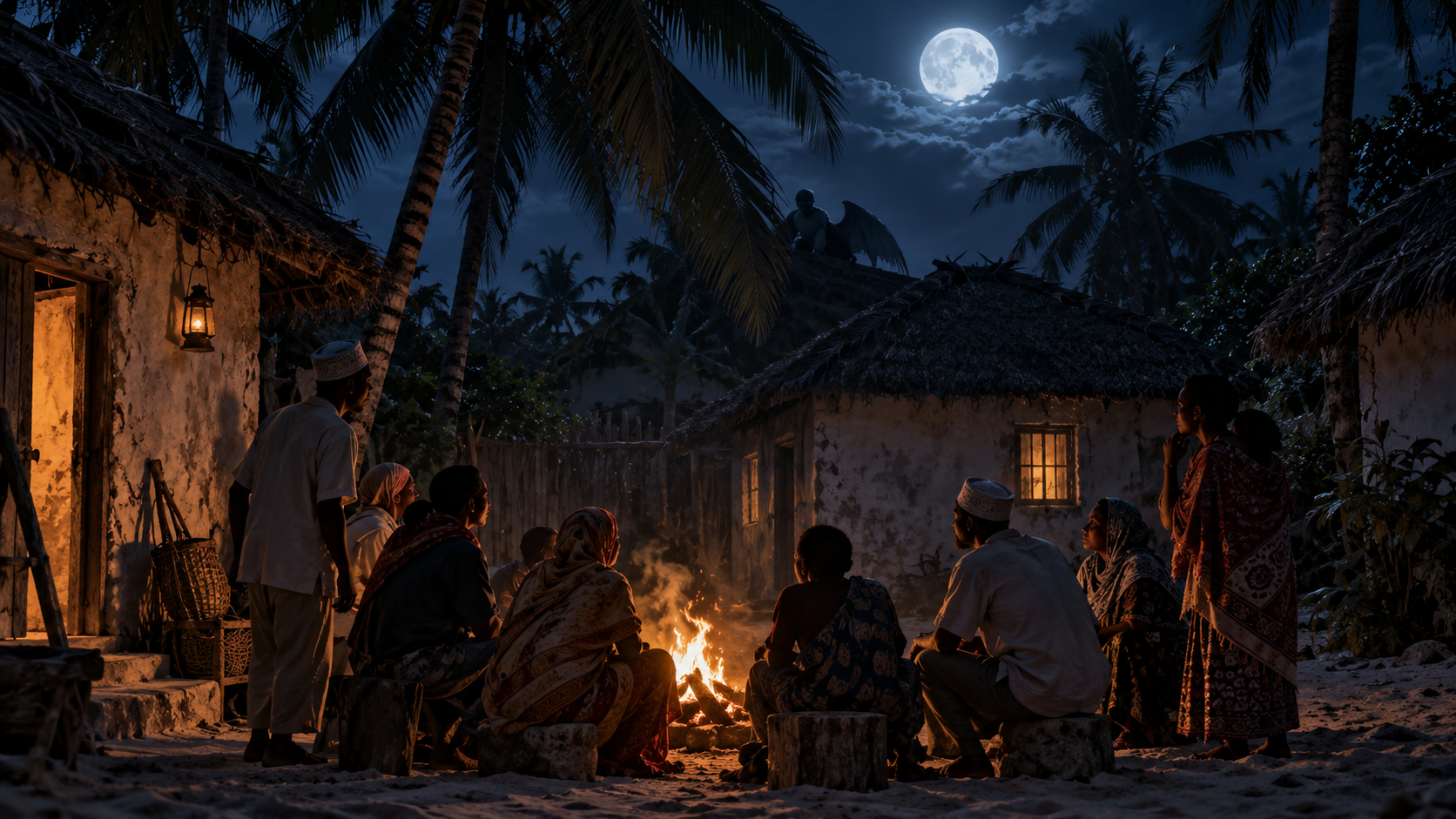
In early 1995, Pemba Island became the center of an intense wave of reports involving Popobawa, a feared shape-shifting spirit whose name roughly translates as “bat-wing.” Beginning in southwestern Pemba during the first week of February, residents of several communities reported nocturnal assaults, frightening sensations of pressure or paralysis, strange odors and the presence of an unseen or changing entity. Fear spread from village to village, prompting many residents to spend nights together outdoors around fires in an effort to remain awake. By late March, the panic had largely subsided on Pemba but had begun spreading to Unguja, the main island of Zanzibar.
Additional Notes
Popobawa was not entirely new in 1995. Residents associated the name with an earlier series of incidents dating to the period following the Zanzibar Revolution, during the presidency of Abeid Amani Karume between 1964 and 1972. The 1995 outbreak nevertheless became the largest and best-documented modern Popobawa panic. The new wave began in southwestern Pemba during the first week of February 1995, shortly after the beginning of Ramadan. Reports then moved from settlement to settlement across the island. Victims described a variety of experiences rather than one consistent physical creature: some reported being pressed or restrained, others described frightening nocturnal assaults, while some households reported strong foul odors or apparent manifestations moving through the neighborhood. One striking feature was the communal response. Families and neighbors sometimes abandoned their houses at night and gathered outdoors around fires, attempting to remain awake together. The fear was intensified by a widespread belief that victims had to tell others what had happened to them or risk another visit from Popobawa. This helped reports spread rapidly through communities even in the absence of newspapers on Pemba. The creature itself had no stable appearance. “Popobawa” literally refers to a bat wing, but accounts variously described a spirit, demon, beast, human-like intruder or invisible force. Some narratives gave it supernatural abilities such as changing shape, passing through houses or disguising itself as a human being. This variability is one reason the case is better classified as a folkloric or spirit phenomenon than as a conventional zoological cryptid. The panic also had dangerous real-world consequences. On Pemba, at least two men were attacked by crowds after being suspected of being Popobawa or one of its manifestations. Neither was actually shown to be anything other than human. When the panic later spread to Unguja, several further mob attacks occurred and some resulted in deaths. By around 29 March, reports on Pemba had become sporadic. During the second half of March, however, Popobawa stories appeared in Zanzibar Town on Unguja, where the panic continued through April before eventually fading. Reports or rumors also reached mainland Tanzania and even neighboring parts of East Africa. Researchers have proposed a number of interpretations. These include sleep paralysis and related nocturnal experiences, social contagion, collective anxiety, spirit beliefs embedded in Swahili culture, and political tensions surrounding Tanzania’s first multiparty elections later in 1995. Anthropologist Martin Walsh cautions, however, that political explanations became prominent only after several other local interpretations had already developed.
The Location Today
Pemba Island remains inhabited, with coastal settlements, agricultural areas and towns. Accounts of the 1995 Popobawa panic were reported from several communities rather than one surviving, publicly marked event site.
- Environment
- Village / Rural Area, Island
- Time of Day
- Night
- Evidence Level
- Witness Report
- Visiting the Location
- Limited
- Ownership of the Location
- Mixed