
Summary
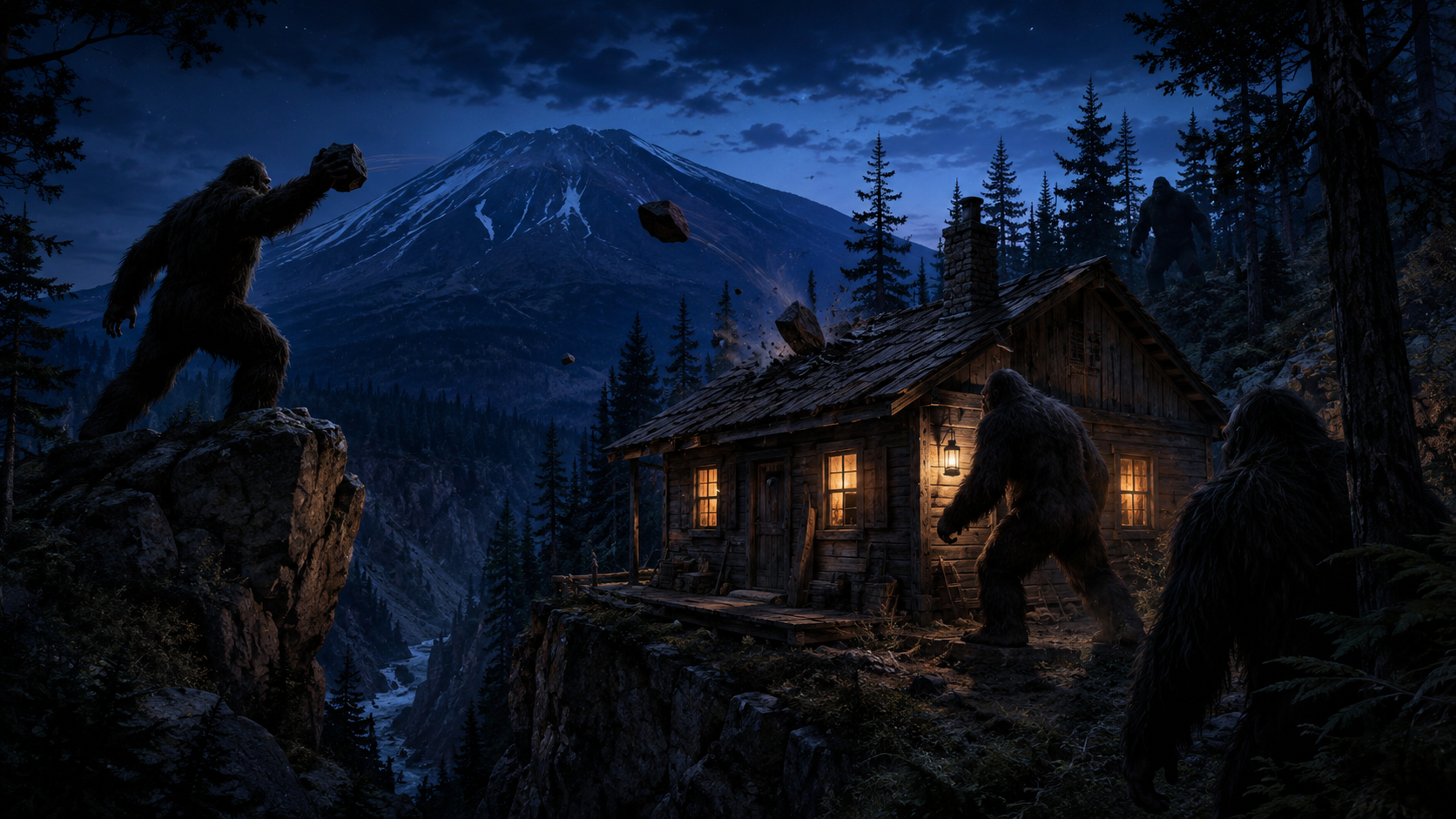
In July 1924, five gold prospectors working near Mount St. Helens reported a violent encounter with several large, hair-covered humanoid creatures. After one of the miners allegedly shot at a creature during the day, the men claimed that several “apemen” surrounded their remote cabin that night, throwing rocks onto the roof and striking the walls. The group fled the following morning. The sensational story helped make Ape Canyon one of the earliest famous locations in modern Bigfoot folklore.
Additional Notes
Fred Beck later recalled that the miners had already found unusually large footprints and heard unexplained whistles and heavy thumping sounds while working their claim near Mount St. Helens. Before the nighttime attack, Beck and another miner encountered a large, dark, hair-covered figure near a pine tree and fired several shots as it retreated. Beck later claimed that they had hit it, although the creature escaped from view. The following morning, after the attack on the cabin had ended, Beck reported seeing another apelike figure near the edge of Ape Canyon. He fired three shots and claimed that the creature toppled over the cliff into the gorge below. No body was recovered. That night, the men said their small cabin came under repeated attack. Rocks allegedly struck the roof and walls for hours, and one creature was said to have reached through an opening in the structure. The miners remained inside with their rifles until daylight before abandoning the area. Beck continued to stand by the story decades later and published his own account in 1967. The incident drew immediate newspaper attention and prompted an investigation by U.S. Forest Service rangers J. H. Huffman and William Welch. They found no body or other convincing physical evidence and demonstrated that the large footprints near the cabin could have been artificially produced. The rangers therefore regarded the miners’ account with considerable skepticism. Despite that conclusion, the story became deeply associated with the area. The gorge was subsequently known as Ape Canyon, and the 1924 incident remains one of the best-known early episodes in North American Bigfoot history.
The Location Today
Ape Canyon is part of the Mount St. Helens volcanic landscape. A modern Ape Canyon Trail allows seasonal recreation, but it should not be equated with the exact location of the alleged 1924 incident. Forest-road works, weather and trail conditions can affect access.
- Environment
- Forest
- Time of Day
- Day / Night
- Evidence Level
- Investigated Case
- Visiting the Location
- Limited
- Ownership of the Location
- Public