
Summary
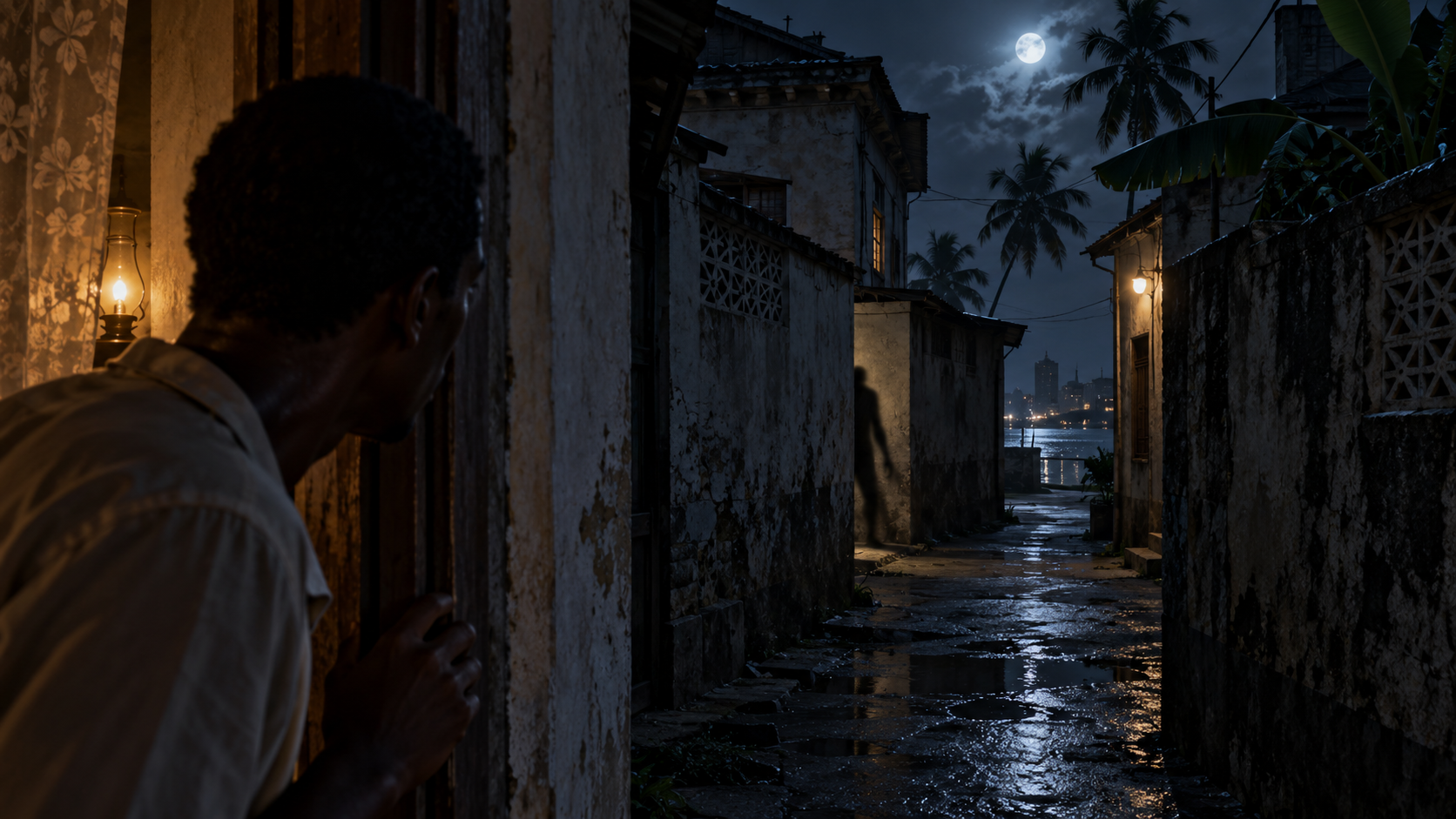
Popobawa is a feared shape-shifting spirit from Zanzibar folklore, traditionally associated with nocturnal attacks, strange sensations and an ability to appear in different forms. By mid-April 1995, reports of the entity had crossed from Zanzibar to mainland Tanzania and reached at least one neighborhood of Dar es Salaam. The mainland reports appeared while the larger panic on Unguja was still continuing, extending the phenomenon beyond the islands where it had begun. Details of individual encounters in Dar es Salaam are less well documented than those from Pemba and Zanzibar Town, but the reports show that fear of Popobawa had spread across the Zanzibar Channel and into Tanzania’s largest city.
Additional Notes
The name Popobawa is usually translated as “bat-wing.” Despite the name, reports do not describe a single consistent creature: Popobawa has been portrayed as a spirit, demon, human-like intruder, winged entity or invisible force capable of changing form. The 1995 panic began on Pemba Island before spreading to Unguja and later to the Tanzanian mainland. The Dar es Salaam reports formed the mainland phase of the 1995 Popobawa wave. According to researcher Martin Walsh, incidents were reported in at least one quarter of the city from around mid-April, shortly after the phenomenon had moved from Pemba to Unguja. Dar es Salaam had strong social and family connections with Zanzibar, including a substantial Zanzibari population. Stories of Popobawa therefore did not remain geographically confined to the islands, and news of alleged encounters could travel rapidly across the channel. Reports or rumors were also said to have reached Tanga on the northern Tanzanian coast and Mombasa in Kenya. Walsh regarded these additional mainland incidents as unconfirmed because detailed information was unavailable, making Dar es Salaam the best-supported mainland extension of the 1995 outbreak. Unlike the better-documented events on Pemba and Unguja, surviving accounts from Dar es Salaam provide few detailed descriptions of individual encounters. It is therefore uncertain whether the experiences closely matched the nocturnal attacks reported on Zanzibar or whether the mainland reports developed their own local variations. The 1995 reports were not the last time Popobawa would be associated with Dar es Salaam. Another smaller outbreak was reported in the city in February and March 2007, suggesting that the legend had become established beyond Zanzibar itself. Various interpretations have been offered for the spread of the Popobawa reports, but the limited documentation from Dar es Salaam leaves the nature of the individual incidents open to interpretation.
The Location Today
Dar es Salaam remains Tanzania’s largest city and an active coastal metropolis. Popobawa-related accounts were reported in the wider area following the 1995 Zanzibar panic, but no single authenticated incident address or dedicated visitor site has been established here.
- Environment
- Coast / Beach, Urban Area
- Time of Day
- Night
- Evidence Level
- Witness Report
- Visiting the Location
- Limited
- Ownership of the Location
- Mixed