
Summary
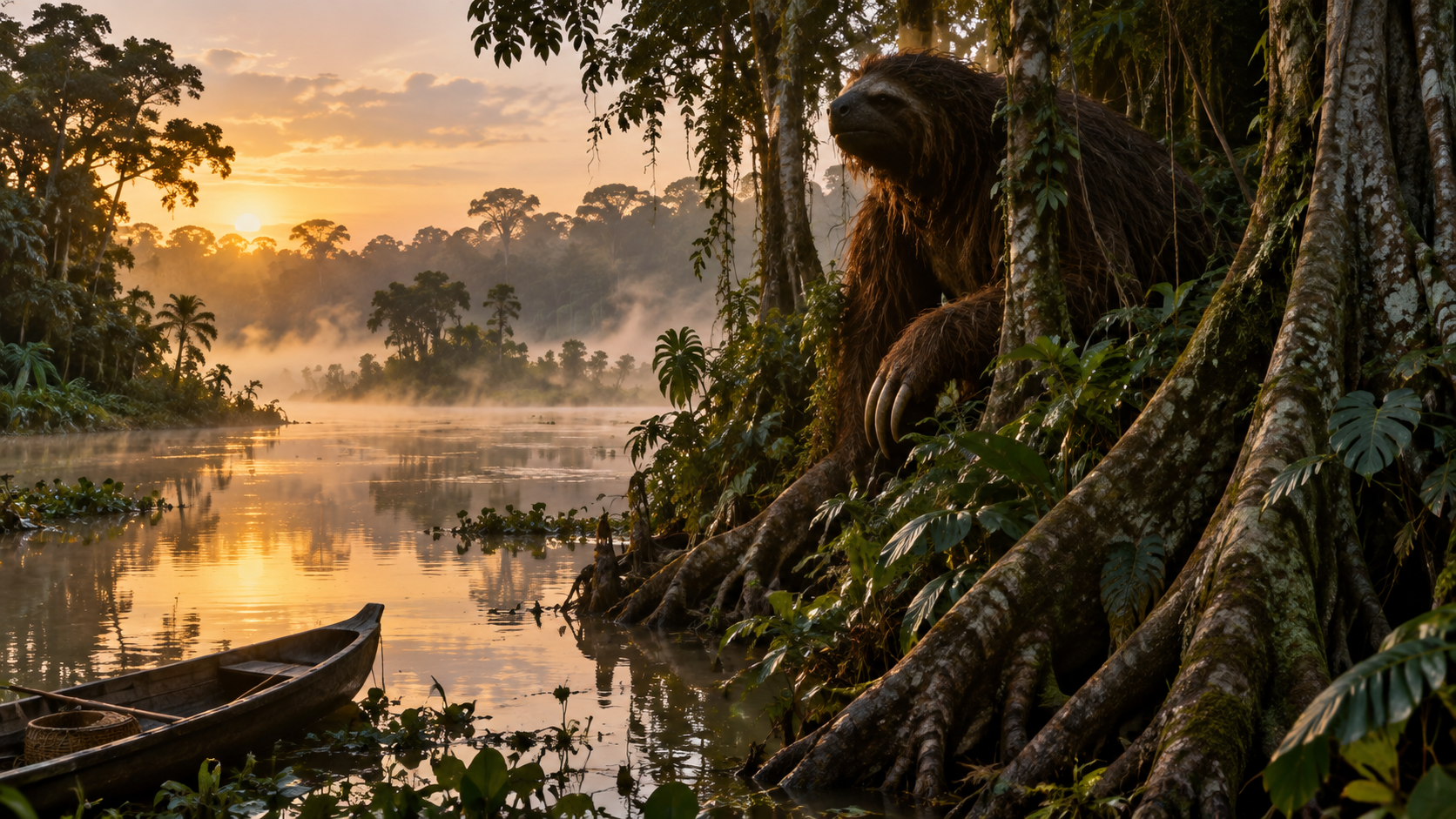
Communities in the wider Xingu region of Pará preserve traditions of the Mapinguari as a powerful and dangerous being associated with the rainforest. Ethnographic research among riverine hunters in the Riozinho do Anfrísio Extractive Reserve, within the municipality of Altamira, records the Mapinguari alongside other supernatural forest entities believed to regulate hunting and human behavior in the forest. Rather than representing a single dated sighting, the Xingu case reflects an enduring regional tradition in which encounters with the Mapinguari form part of the cultural understanding of remote forest environments.
Additional Notes
The Xingu Mapinguari tradition is especially interesting because it appears within the practical world of hunting rather than only in stories told for entertainment. Ethnographic work with riverine residents of the Riozinho do Anfrísio Extractive Reserve in Altamira found that hunting knowledge is closely intertwined with symbolic and supernatural ideas. The Mapinguari, Curupira and Matinta Pereira are among the beings described as influencing or regulating the actions of hunters in the forest. In these traditions, the rainforest is not viewed simply as an empty landscape containing animals and plants. Certain places, behaviors and hunting practices are understood through relationships with powerful non-human beings. The Mapinguari therefore functions partly as a guardian or enforcer of forest rules, particularly in stories connected with hunters who travel deep into remote areas. The precise appearance of the creature varies considerably between Amazonian traditions. Popular descriptions elsewhere in Brazil may portray a huge hairy being with claws, an overwhelming odor, unusual feet, a single eye or even a second mouth on its torso. These spectacular characteristics should not automatically be applied to every Xingu account, however, because regional traditions often merge or overlap with other forest beings. This is particularly relevant in the Xingu basin because the closely related figure known as the Capelobo is also strongly associated with Pará and the Xingu River region. Historical folklore studies describe the Pará Capelobo as a large dangerous creature sometimes resembling a tapir, while other versions give it humanoid characteristics and explicitly compare it with the Mapinguari. The boundaries between these traditions can therefore be fluid rather than taxonomically clear. A later study of residents of the Xingu Extractive Reserve likewise recorded Mapinguari or Capelobo among the recurring supernatural beings in local narratives. This reinforces the idea that the tradition is geographically rooted in the wider Xingu region rather than being imported solely from better-known Mapinguari hotspots such as Acre or the Tapajós basin. 2017 is used here as the sort year because it marks the publication of a detailed ethnographic study documenting the role of the Mapinguari in hunting traditions around Riozinho do Anfrísio. The oral tradition itself is considerably older and cannot be assigned a reliable starting year.
The Location Today
The Xingu is a large river basin in Brazil that includes Indigenous territories, forests and settlements. Mapinguari traditions are associated with the wider landscape, not one authenticated public encounter site. Visits to Indigenous territories depend on community-led arrangements and applicable authorisation.
- Environment
- Forest, River
- Time of Day
- Various
- Evidence Level
- Folklore
- Visiting the Location
- Limited
- Ownership of the Location
- Unknown