
Summary
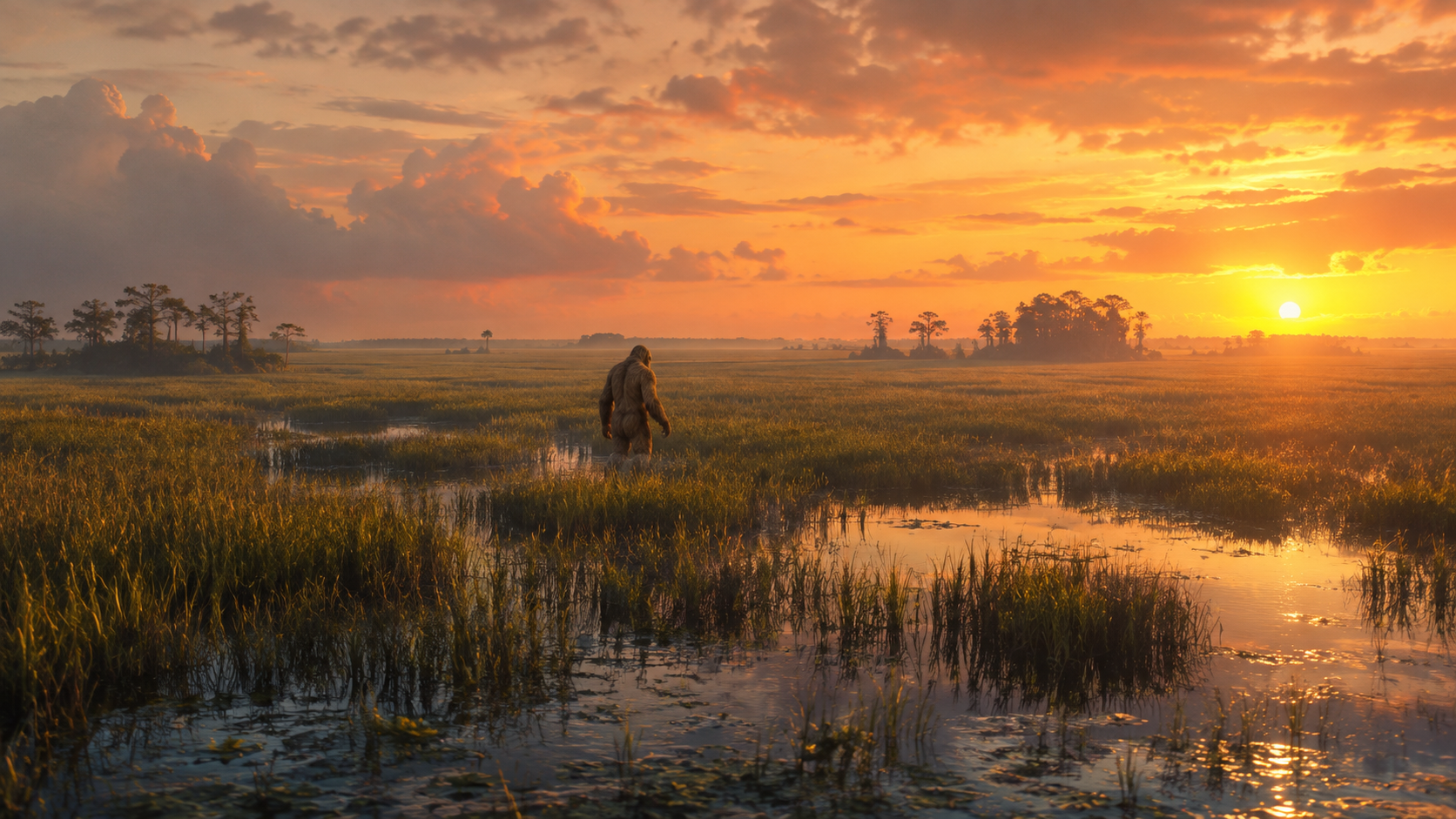
For decades, Florida’s Everglades have been associated with reports of the Skunk Ape, a large, upright, hair-covered creature frequently compared to Bigfoot. Sightings became particularly prominent during the 1960s and 1970s, when residents, hunters and visitors across South Florida reported dark or reddish-brown humanoid figures, unusual tracks and a powerful foul odor. The Everglades tradition forms the broader regional background from which later hotspots such as Big Cypress and Ochopee emerged.
Additional Notes
Reports of a large, foul-smelling, ape-like creature in Florida predate the modern Skunk Ape name, but the phenomenon became much more visible in South Florida during the late 1960s and early 1970s. The Everglades and surrounding wetlands increasingly appeared in newspaper reports and local accounts involving dark or reddish-brown humanoid figures, unusual tracks and a strong unpleasant odor. 1971 is used here as the sort year because it marks the beginning of a particularly active and better-documented period of South Florida reports. Sightings from the early 1970s helped establish the Skunk Ape as a recognizable regional phenomenon rather than a collection of isolated stories. Reports during this period came from areas along the developed fringes of the Everglades, including communities in Broward County. The timing also coincided with rapid suburban growth toward previously remote wetlands. Increased access to the Everglades may have produced more encounters with unfamiliar wildlife, while also giving local legends greater exposure through newspapers and word of mouth. Skeptical explanations have included bears, escaped or exotic primates, misidentification, hoaxes and the difficulty of judging size and distance in dense swamp vegetation. The Skunk Ape tradition continued long after the 1970s. Later reports from Big Cypress and Ochopee, including photographs, tracks and video claims, renewed national interest in the creature. Those specific incidents are treated separately in PU (Places of the Unexplained), while this case represents the broader Everglades sighting tradition that helped establish the Skunk Ape as Florida’s best-known cryptid.
The Location Today
Everglades National Park remains a large protected wetland with designated visitor areas, trails and waterways. Accounts of the Skunk Ape concern various parts of the region, and no specific encounter site is preserved as an official attraction.
- Environment
- Forest, Swamp / Marsh
- Time of Day
- Various, often night
- Evidence Level
- Witness Report
- Visiting the Location
- Ticketed, Limited
- Ownership of the Location
- Public