
Summary
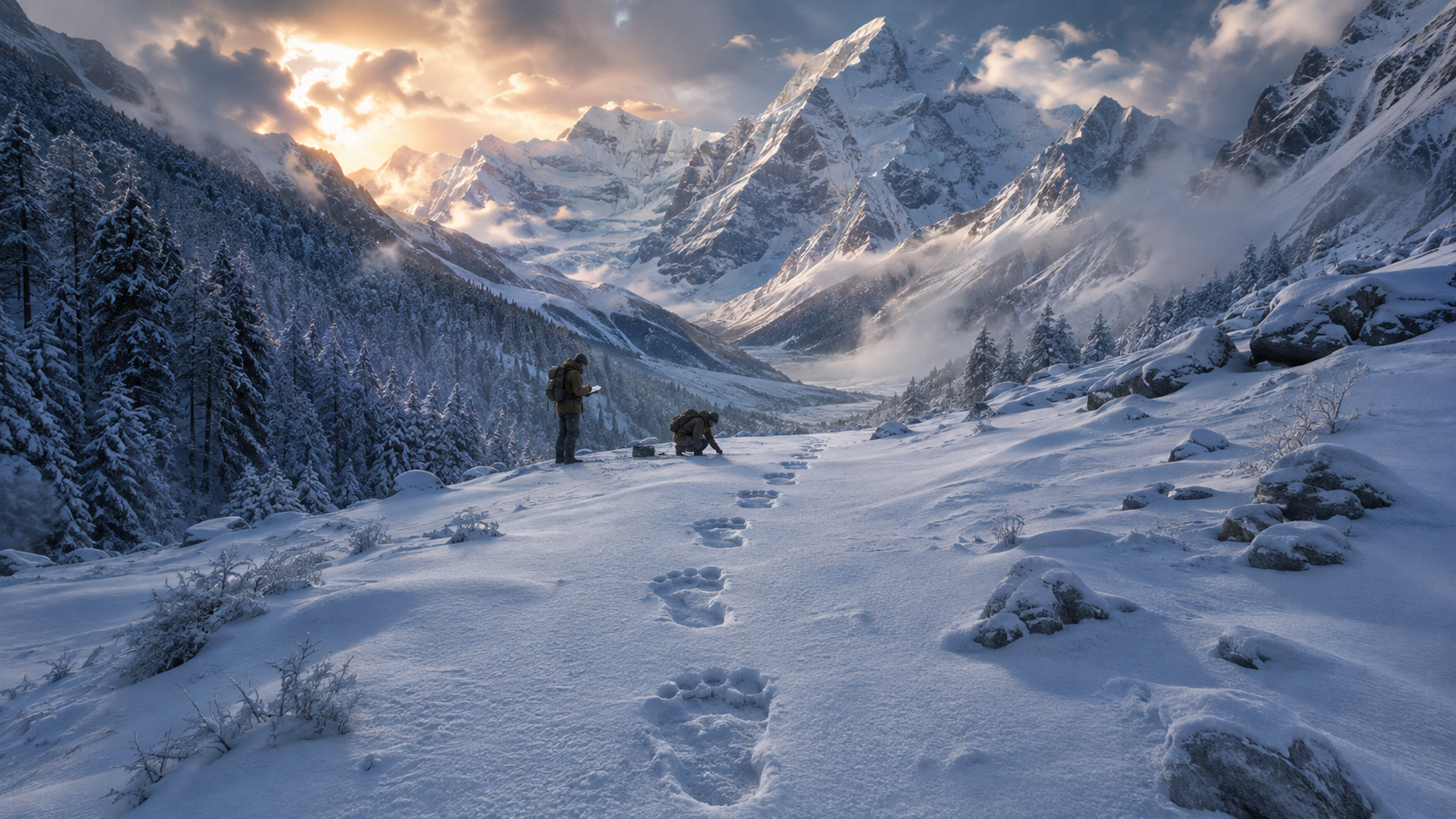
In December 1972, researchers in Nepal’s remote Barun Valley discovered a fresh trail of unusual footprints in snow near Kongma La. Sherpa companions identified them as Yeti tracks, and plaster casts were later made of the impressions. The mysterious prints helped draw conservationist Daniel Taylor back to the region in 1983, where he found similar human-like tracks and began a long investigation into what animal might produce them. His research ultimately favored Himalayan black bears rather than an unknown primate.
Additional Notes
In December 1972, Edward Cronin and Howard Emery were camping on a snowy alpine ridge near Kongma La in the Makalu-Barun region. The following morning, Emery reportedly discovered a fresh set of tracks passing through their camp. Their Sherpa companions identified the impressions as Yeti tracks, and plaster casts were later made. The Barun Valley continued to attract Yeti researchers because of its exceptional isolation and dense wilderness. Daniel Taylor entered the valley in 1983 after being advised by Nepal’s king that it was one of the country’s wildest places and a plausible location for such an animal. Taylor found fresh tracks resembling the famous human-like Yeti prints and photographed and cast them. Rather than concluding that he had discovered an unknown humanoid, Taylor investigated local reports of two apparent types of bear. He eventually argued that Himalayan black bears could produce misleadingly human-like tracks when the hind paw lands partly over the front paw, a process known as direct registration. Snowmelt and distortion could further exaggerate the effect. The Yeti investigation had an unexpected legacy: Taylor became deeply impressed by the Barun Valley’s biodiversity and later helped campaign for its protection. The region eventually became part of the Makalu-Barun National Park, making this one of the rare cryptid investigations that contributed directly to a major conservation effort. In April 2019, the Makalu-Barun region returned to international attention when an Indian Army mountaineering team reported finding a line of unusually large footprints near Makalu Base Camp. The prints were photographed and described as measuring approximately 32 by 15 inches (81 by 38 cm). The army publicly suggested a possible connection to the Yeti, although no animal was observed and the tracks were not independently verified as belonging to an unknown species. Because this case combines reports and investigations from different years, the witness count given here is a conservative estimate rather than a documented total.
The Location Today
Makalu-Barun is a protected Himalayan landscape with remote mountain trails and permitted trekking routes. The reported footprints do not correspond to a confirmed, marked public viewing site. Entry rules apply to the national park.
- Environment
- Forest, Mountain
- Time of Day
- Various
- Evidence Level
- Investigated Case
- Visiting the Location
- Guided, Limited
- Ownership of the Location
- Public