
Summary
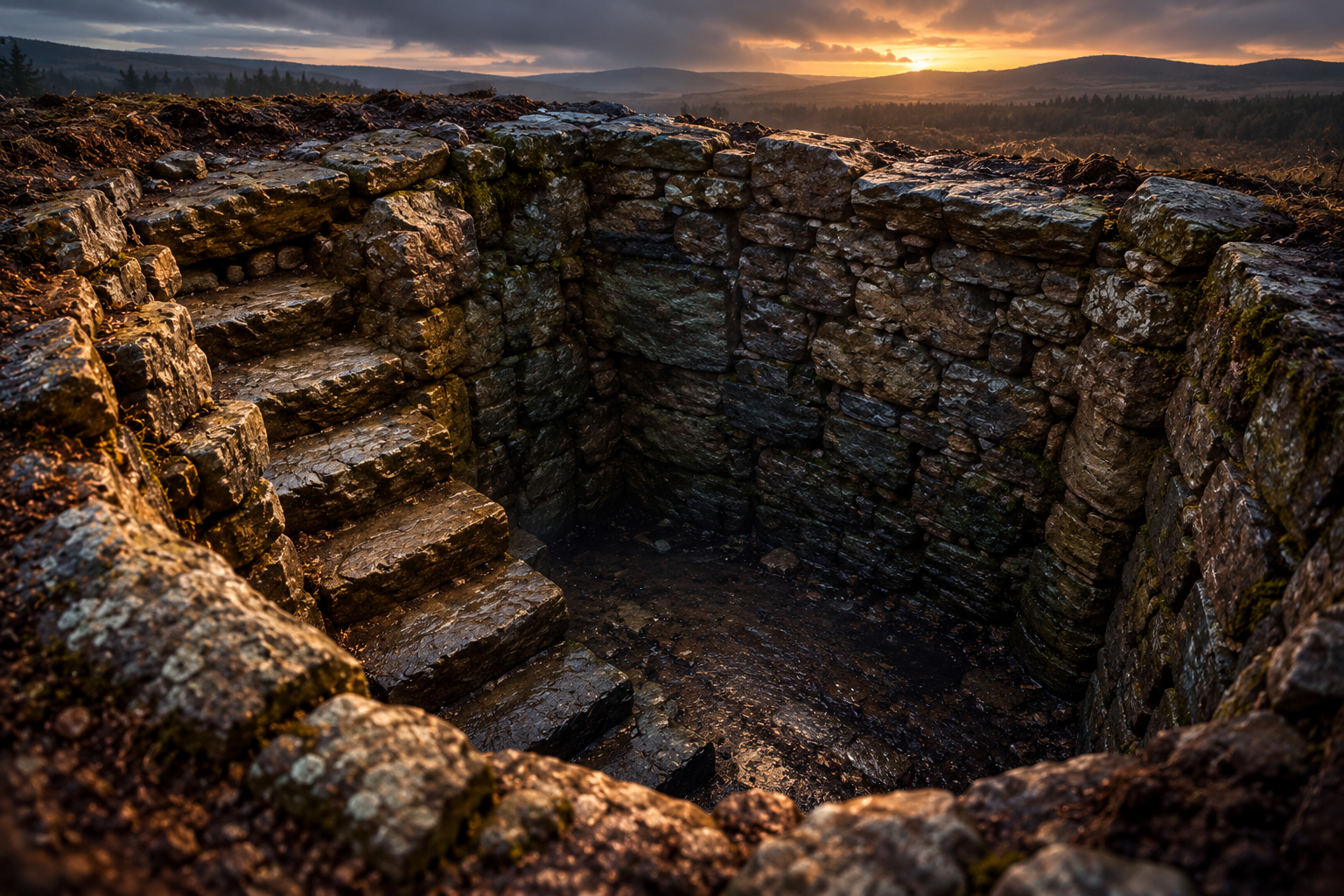
In January 2026, archaeologists working at Evelix Quarry near Dornoch, Scotland, uncovered an unusual stone-lined structure containing human remains. The carefully constructed pit featured steps and a clay-like lining, while its fill included animal bones, charcoal and burnt wood. Preliminary evidence suggests an Iron Age origin, but the structure's original purpose and the circumstances of the burial remain uncertain. Archaeologists have proposed several possibilities, including a ritual well that was deliberately closed after a person was placed inside.
Additional Notes
The discovery was made during archaeological work ahead of an extension to Evelix Quarry in the Scottish Highlands. The approximately three-by-two-metre stone-lined structure was built with carefully fitted stones and included a short flight of steps. A clay-like lining in its lower levels suggested that it may once have been intended to retain water or another liquid. Excavation revealed human skeletal remains, provisionally identified as those of an adult female. The remains were found within material that had already begun to fill the structure. Further deposits above them included animal bones, charcoal and larger pieces of burnt wood. The steps also appeared to have been deliberately blocked. These observations suggest that the structure underwent several stages of use, abandonment or closure rather than simply serving as an ordinary grave. Archaeologists have considered whether the structure was originally a water-holding installation, a ritual well or part of a building. Nearby postholes may indicate the presence of Iron Age roundhouses, while artefacts recovered from the wider excavation area support a possible prehistoric date. A reused stone tool incorporated into the structure's wall adds another intriguing detail, although its significance is unknown. One interpretation is that the burial formed part of a deliberate closing ceremony. However, neither a ritual purpose nor a human sacrifice has been established. The burnt material does not itself demonstrate that the person was cremated or killed in a fire. Further analysis of the remains, deposits and dating evidence is needed to establish the sequence of events and explain why a human body was placed inside this unusual structure. This case is classified as a Current Case because the archaeological discovery was made in 2026 and investigations are still ongoing. The information presented reflects the findings available as of October 2026 and may change as further analyses, dating results and archaeological research become available.
The Location Today
The archaeological structure was discovered within the Evelix Quarry extension area near Dornoch in the Scottish Highlands. The site is part of a working quarry and is not a public visitor attraction. Its archaeological remains were investigated during development-related excavation, and access to the location is restricted.
- Environment
- Archaeological Excavation
- Time of Day
- Unkown time of day
- Evidence Level
- Investigated Case
- Visiting the Location
- No Public Access
- Ownership of the Location
- Private