
Summary
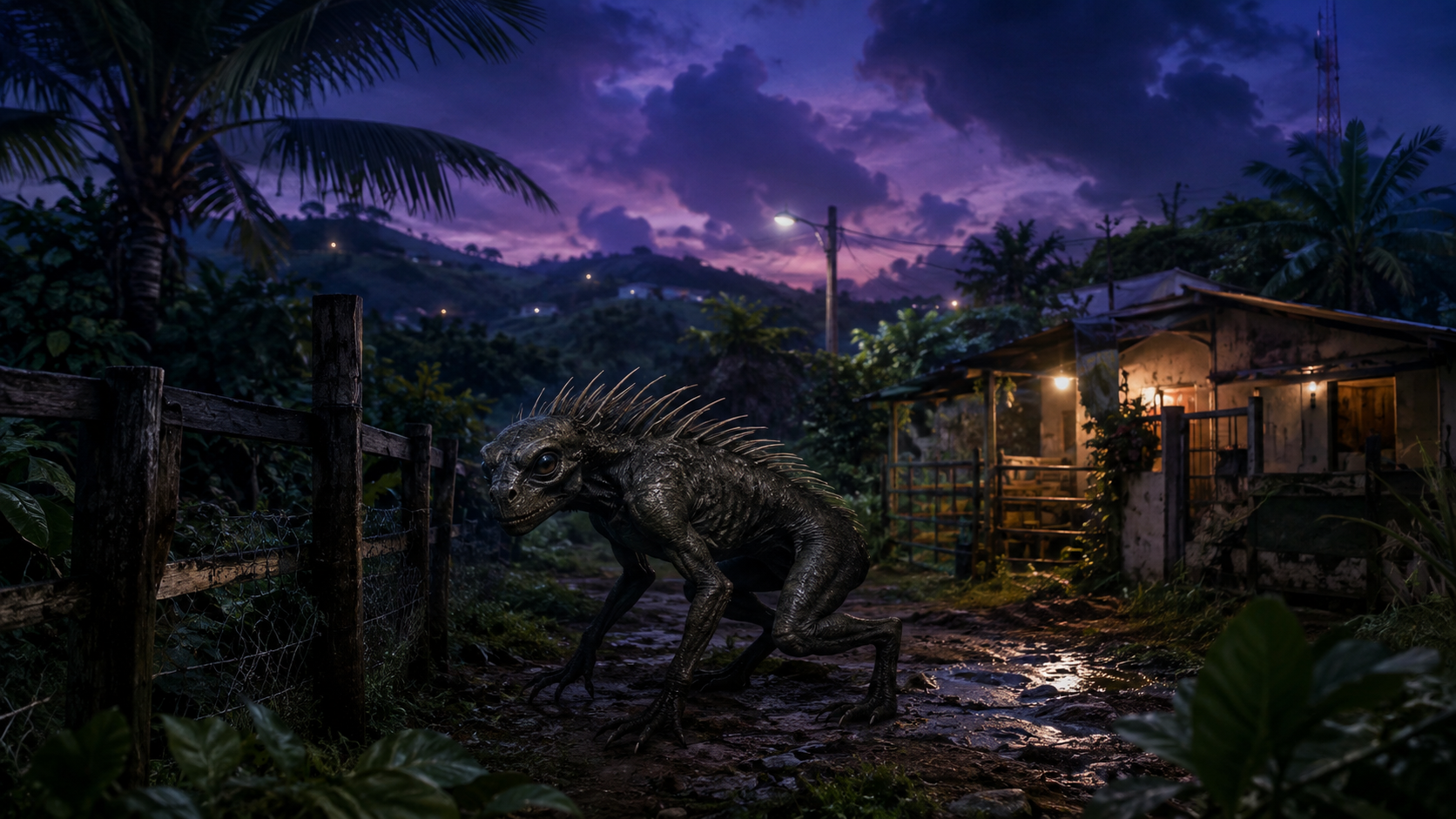
In 1995, Canóvanas became one of the main centers of Puerto Rico’s emerging Chupacabra phenomenon. Residents reported encounters with an unfamiliar creature described as short, powerful and sometimes reptile-like, while unexplained livestock deaths were attributed to the same being. One of the best-known witnesses, Madelyne Tolentino, reported observing the creature at close range near her home. The reports became so widespread that local officials organized searches for the alleged predator.
Additional Notes
The Chupacabra phenomenon had already begun elsewhere in Puerto Rico earlier in 1995, but Canóvanas soon became one of its most famous locations. Contemporary reporting described numerous residents claiming close encounters, alongside repeated unexplained losses of farm animals in and around the municipality. Madelyne Tolentino provided one of the most influential descriptions. She and her mother reportedly watched an unusual creature near their home for several minutes. Tolentino described it as roughly three to four feet tall, with powerful hind legs, unusual eyes and a row of prominent structures or spines along its back. Her husband and another man reportedly also saw the creature as it moved away. The reports became serious enough that Canóvanas mayor José Ramón “Chemo” Soto organized large searches in October 1995. Around 200 residents, police officers, civil-defense personnel and others participated in one expedition through the surrounding countryside. No unknown creature was captured. Soto later recalled that local livestock owners had been genuinely worried by the unexplained incidents. Veterinarians and officials considered ordinary predators, escaped exotic animals and deliberate human activity among possible explanations. The Canóvanas wave nevertheless played a major role in transforming the Chupacabra from a Puerto Rican mystery into an internationally recognized cryptid.
The Location Today
Canóvanas remains an inhabited municipality in Puerto Rico. The reported Chupacabra sightings were spread across the area rather than tied to a single preserved encounter site; streets, farms and other locations have different access conditions.
- Environment
- Forest, Village / Rural Area
- Time of Day
- Various, particularly night
- Evidence Level
- Investigated Case
- Visiting the Location
- Limited
- Ownership of the Location
- Mixed