
Summary
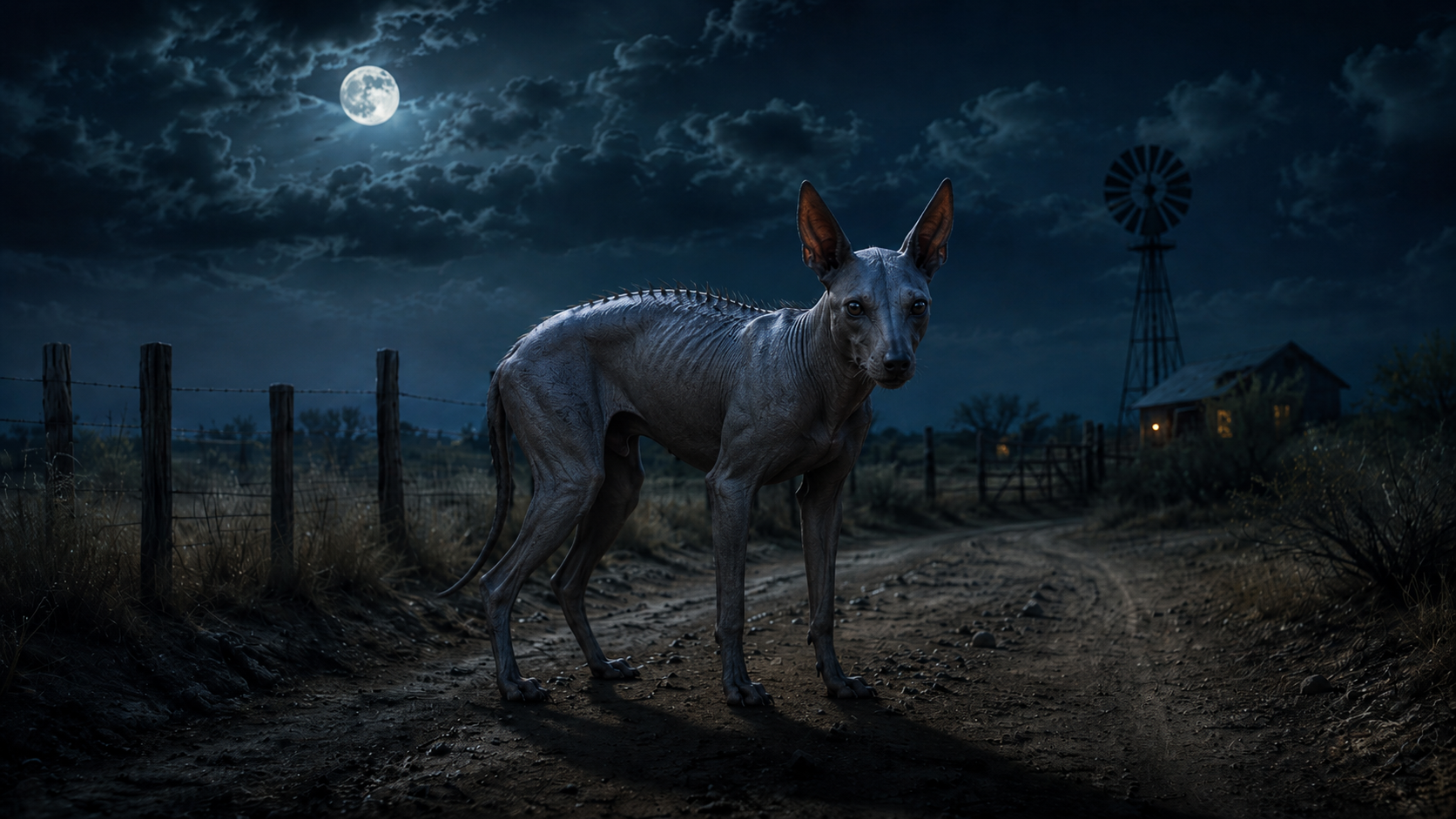
In July 2007, rancher Phylis Canion and neighbors near Cuero, Texas, discovered several unusual hairless canine carcasses that were quickly linked to the Chupacabra legend. Canion had also reported seeing similar animals alive on her property. One preserved specimen was subjected to DNA testing at Texas State University, where researchers identified it as a coyote. The Cuero case became one of the most famous examples of the later, dog-like “Texas Chupacabra” tradition.
Additional Notes
Canion said she first noticed an unusual hairless animal moving across her ranch in daylight in 2007. Soon afterward, she and neighbors found several similar carcasses along a road near the property. Their blue-gray skin, large ears, prominent teeth and almost complete lack of fur made them look strikingly unlike typical coyotes. One specimen was preserved and tissue was submitted for genetic testing. Biologists at Texas State University reported that the DNA sequence was a virtually identical match to coyote (Canis latrans), providing a concrete identification for the tested animal. Researchers subsequently examined skin samples to investigate the cause of its hair loss. Texas wildlife officials have repeatedly noted that coyotes and foxes suffering from sarcoptic mange can lose most of their fur and develop thickened, darkened skin, producing a surprisingly unfamiliar appearance. This condition has explained many later “Chupacabra” carcasses reported across Texas. The Cuero case nevertheless had a major cultural impact. It helped establish the now-familiar American image of the Chupacabra as a hairless canine—very different from the upright, spiny creature described in Puerto Rico in 1995.
The Location Today
Cuero remains a small Texas community. The widely reported 2007 carcass was found by a road near the entrance to Phylis Canion’s ranch; later reporting described a preserved specimen at her home, not a public museum. There is no verified public visitor site at the roadside discovery point.
- Environment
- Village / Rural Area
- Time of Day
- Various
- Evidence Level
- Investigated Case
- Visiting the Location
- No Public Access
- Ownership of the Location
- Unknown