
Summary
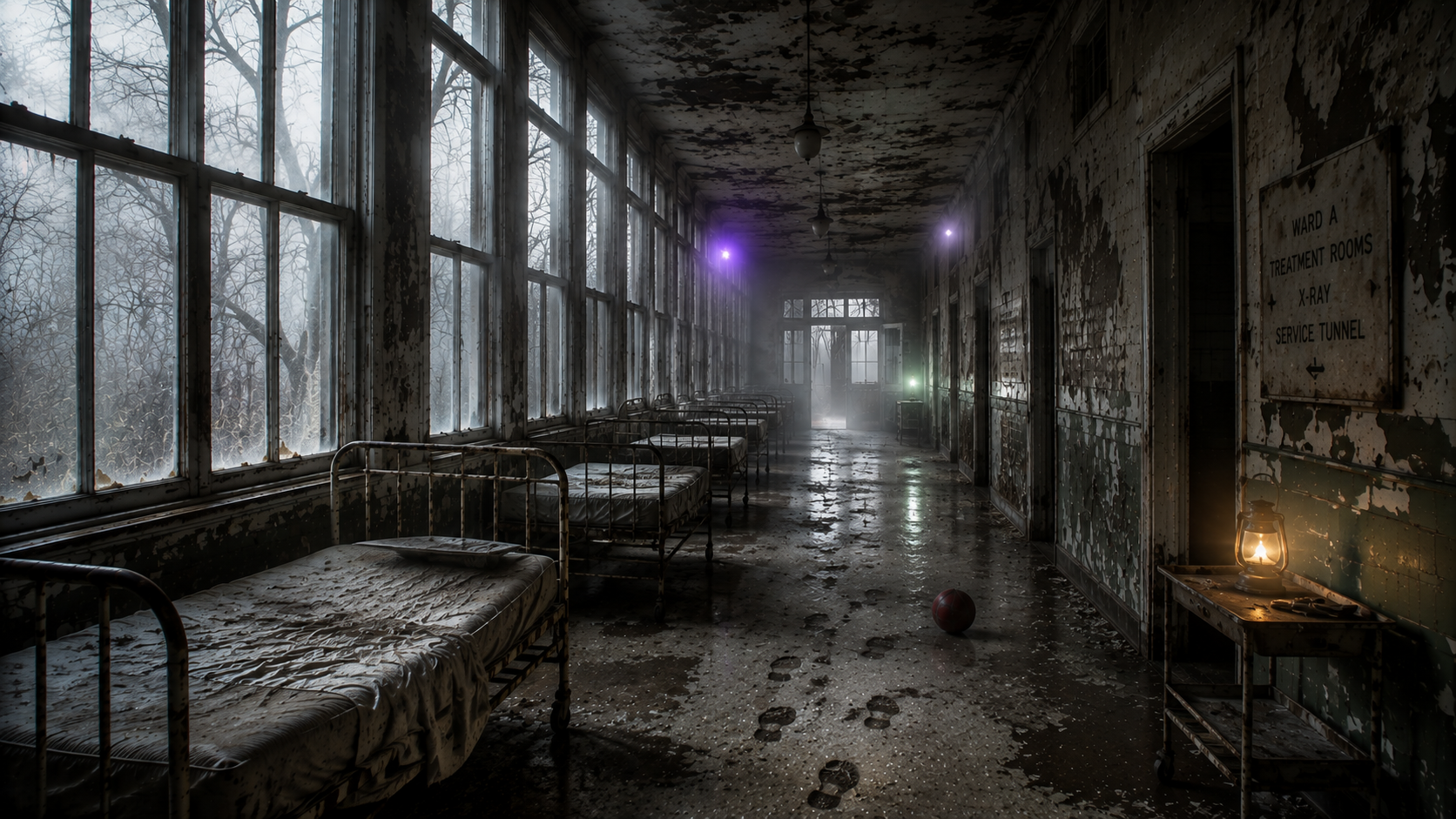
Waverly Hills Sanatorium in Louisville, Kentucky, was established in 1910 during a severe tuberculosis epidemic and expanded into a massive five-story hospital that opened in 1926. Thousands of patients and staff passed through the institution before the tuberculosis hospital closed in 1961. Over subsequent decades, former workers, volunteers, visitors and paranormal investigators reported unexplained footsteps and voices, slamming doors, shadowy human figures and apparitions throughout the abandoned building. Particular locations, including the children's areas, Room 502, the morgue and the underground service tunnel, became associated with recurring paranormal reports. Numerous investigative teams have since examined the property using audio recorders, infrared and thermal cameras and electromagnetic-field meters, producing recordings and measurements they have interpreted as unexplained. Because reports span decades and involve large numbers of visitors and investigators, an exact witness total cannot be established; the witness count given here represents a conservative estimate.
Additional Notes
Waverly Hills developed some particularly persistent legends. Room 502 is said to be haunted by nurses who allegedly died there, while visitors have reported encountering shadow figures and a ghostly child often called “Timmy.” The historical basis of some of these stories is questionable: research into the famous Room 502 tale has failed to verify the commonly repeated account of two nurses dying there. The property's paranormal reputation therefore combines modern witness reports with folklore that developed around the abandoned hospital. One of Waverly Hills' most notorious features is the long underground tunnel commonly called the “Body Chute” or “Death Tunnel.” The tunnel originally carried supplies between the hospital and the bottom of the hill, but historical accounts indicate that during part of the sanatorium's operation it was also used to remove deceased patients discreetly, avoiding the psychological impact of visibly transporting bodies past other tuberculosis patients. Contrary to some later legends, however, there is no evidence that bodies were routinely subjected to gruesome procedures in a supposed “draining room”; surviving building plans identify that area as a transformer room. Paranormal investigations have produced a variety of reported anomalies. During one large overnight investigation, Louisiana Spirits deployed infrared cameras, audio recorders, EMF meters and thermal imaging equipment throughout the building. Investigators reported seeing dark human-like figures, hearing unexplained voices and children's laughter, detecting intermittent EMF spikes and subsequently recovering numerous alleged EVPs and unusual photographs. In one incident, several investigators simultaneously reported seeing what appeared to be the dark figure of a young girl in a dress. A TAPS investigation also documented phenomena that investigators could not immediately explain. After environmental testing and eliminating several apparent anomalies — including a moving door in Room 502 caused by air-pressure differences — the team reported three remaining incidents: an unexplained voice recorded on an empty fourth floor, a short-lived human-torso-sized thermal anomaly in a third-floor corridor and repeated K2 electromagnetic-field responses corresponding with questions during a session in the solarium. TAPS described the findings not as proof of a haunting, but as evidence they considered worthy of further investigation.
The Location Today
Waverly Hills Sanatorium survives as a former hospital building in Louisville. The site hosts scheduled tours, investigations and events; off-season access is limited and private bookings depend on availability.
- Environment
- Hospital
- Time of Day
- Various – many reports at night
- Evidence Level
- Investigated Case
- Visiting the Location
- Ticketed, Guided, Limited
- Ownership of the Location
- Unknown