
Summary
The Trovants of Costești, Romania, are extraordinary sandstone formations popularly known as “living stones.” Their rounded shapes and unusual protrusions have inspired claims that they grow, reproduce, or even move on their own. Some resemble enormous stone eggs, while others appear to have smaller stones emerging from their surfaces. Although these characteristics have attracted mysterious interpretations, geological processes provide a natural explanation for their formation. Mineral-rich water and the cementation of sedimentary material create the distinctive shapes. The stones remain a striking example of how an unusual natural phenomenon can become the subject of enduring mystery and folklore.
Additional Notes
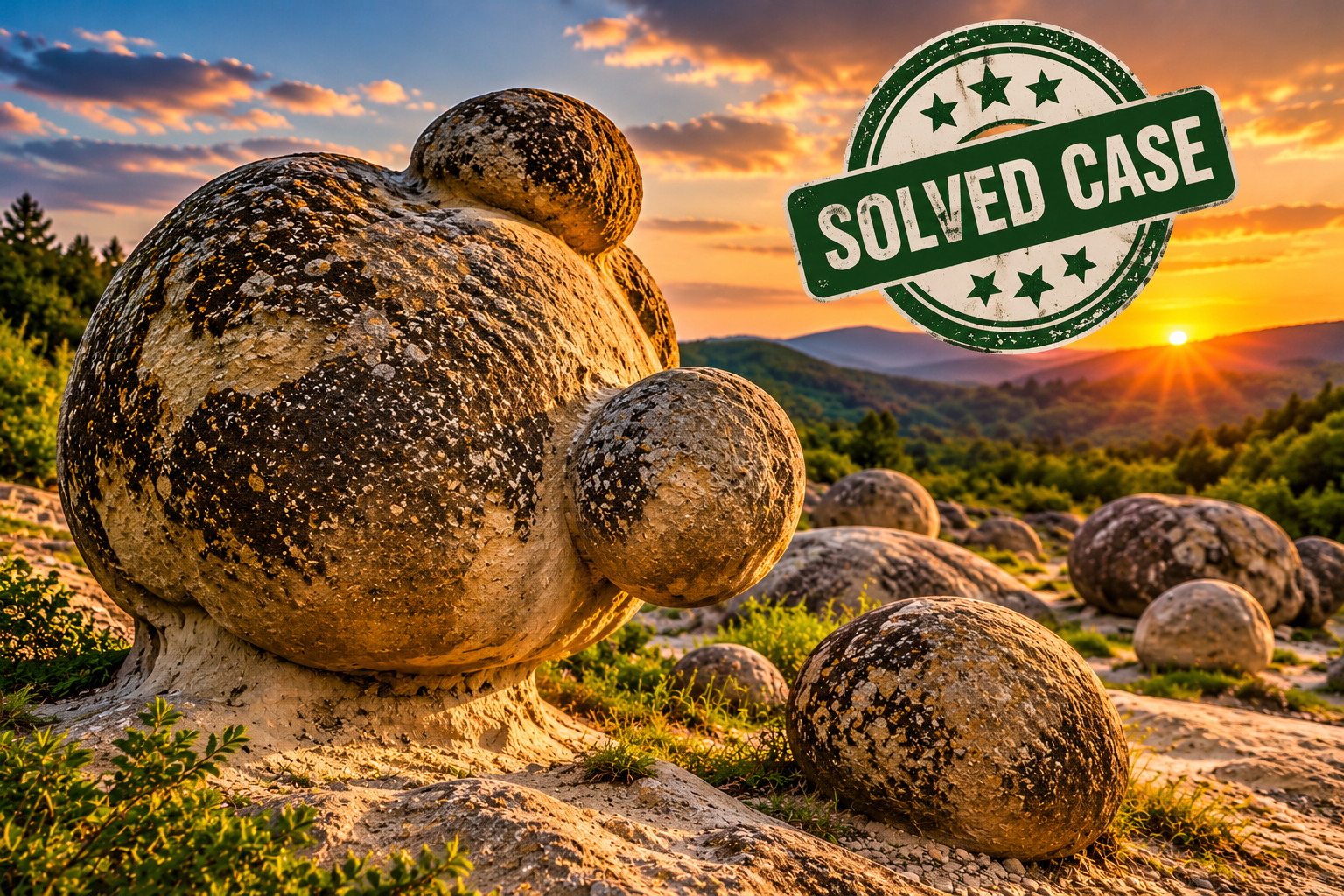
Near the village of Costești in Romania's Vâlcea County, visitors can encounter an unusual landscape dotted with rounded and irregular sandstone formations known as Trovants. Some are relatively small, while others reach impressive dimensions. Their distinctive shapes have made them the subject of popular stories describing stones that grow, multiply, and occasionally change position. The name Trovant is associated with naturally occurring sedimentary concretions. These formations develop through geological processes in which mineral-rich groundwater contributes to the cementation of sedimentary material. Differences in composition, cementation, and weathering produce the rounded bodies and unusual surface features visible today. One particularly intriguing characteristic is the appearance of smaller protrusions on larger stones. These have sometimes been interpreted as evidence that the stones reproduce. In geological terms, however, they are nonliving structures formed through natural processes. Stories that the stones move independently have also circulated, but there is no reliable scientific evidence that Trovants possess any ability to move voluntarily. Changes in their surroundings, erosion, and ordinary physical displacement should not be confused with biological activity. The formations at Costești are protected within a geological nature reserve commonly known as the Trovants Museum. Their unusual appearance continues to attract visitors and inspire imaginative descriptions. The mystery is therefore considered explained: the stones are neither living organisms nor supernatural objects. Nevertheless, their appearance remains extraordinary, demonstrating how natural geology can create something that looks almost impossible.
The Location Today
The Trovants can still be seen at the Trovants Museum Natural Reserve near Costești in Vâlcea County, Romania. The outdoor geological site preserves a collection of unusual sandstone formations in their natural surroundings. Visitors can observe the stones and their distinctive shapes, although access conditions and visitor facilities should be checked locally before travelling.
- Environment
- Mountain, Museum
- Time of Day
- Time of day: Not Applicable
- Evidence Level
- Investigated Case
- Visiting the Location
- Free Access
- Ownership of the Location
- Public