
Summary
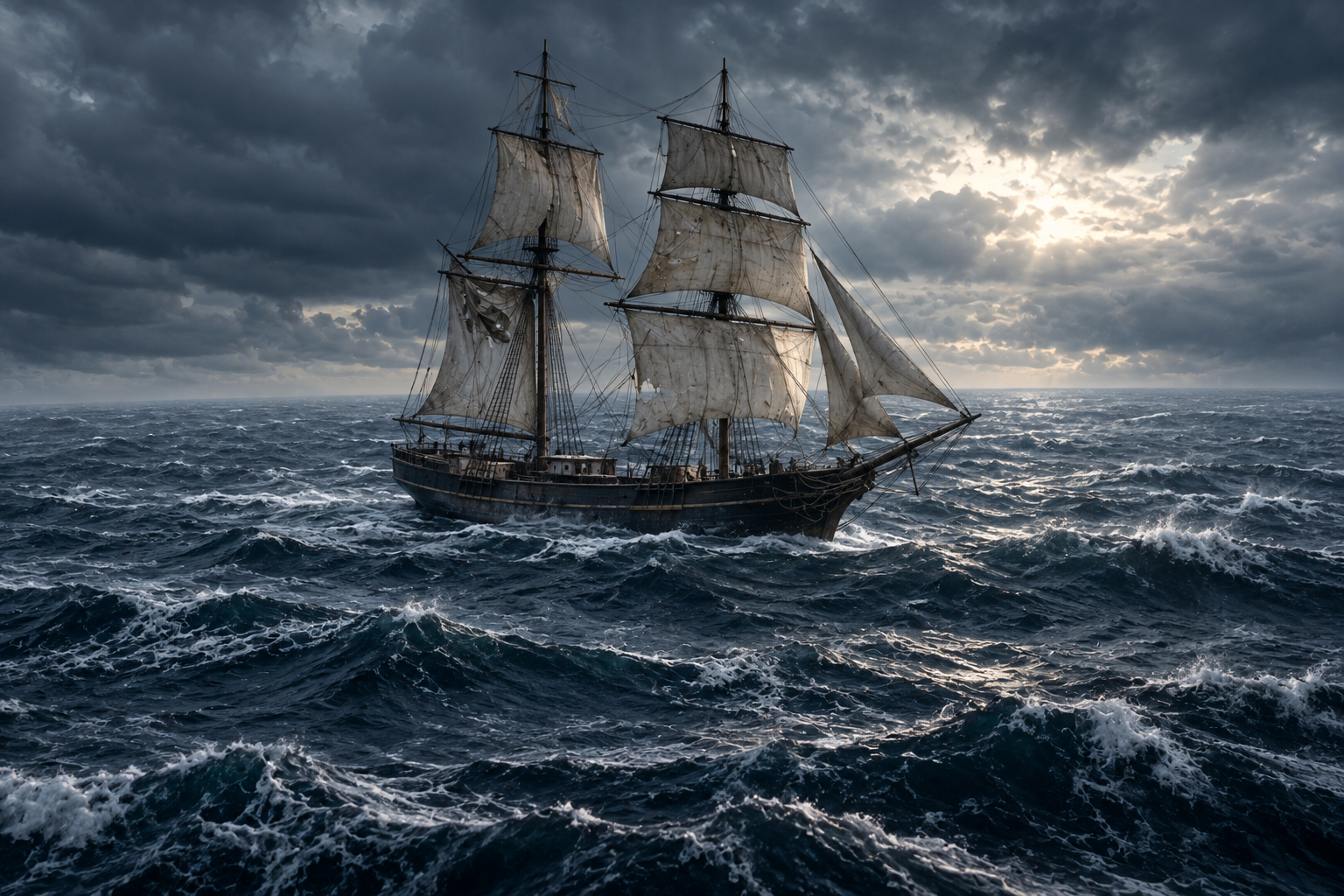
On December 4, 1872, the American brigantine Mary Celeste was discovered drifting in the North Atlantic approximately 400 miles east of the Azores. The vessel was abandoned but remained seaworthy, while its cargo and many personal belongings were still aboard. Its only lifeboat was missing, along with Captain Benjamin Briggs, his wife, their two-year-old daughter and seven crew members. Despite an official investigation and numerous later theories, no confirmed explanation for the abandonment was established, and none of the ten people were ever found.
Additional Notes
The Mary Celeste departed New York for Genoa on November 7, 1872, carrying 1,701 barrels of industrial alcohol. On board were Captain Benjamin Spooner Briggs, his wife Sarah, their two-year-old daughter Sophia and seven crew members. After approximately two weeks of difficult weather, the vessel's final known log-slate entry was made on November 25 near Santa Maria in the Azores. Nine days later, the brigantine Dei Gratia encountered the Mary Celeste sailing erratically with nobody visible on deck. The boarding party found no one aboard. The ship's only lifeboat was missing, as were several navigational instruments and ship papers, while personal belongings and substantial provisions remained behind. Approximately 3.5 feet of water was present in the hold and one of the ship's pumps had been dismantled. Some sails were missing or damaged, but the vessel itself remained seaworthy enough to be sailed to Gibraltar by a small salvage crew. A Vice-Admiralty Court investigation in Gibraltar examined the possibility of violence, mutiny, piracy or fraud but established no evidence proving foul play. Later explanations have included concern over leaking alcohol barrels, difficulties determining the amount of water entering the vessel, pump problems, severe weather and a precautionary evacuation. Nine of the alcohol barrels were subsequently found empty, although no evidence of an explosion or fire was discovered. The missing lifeboat strongly suggests that the occupants deliberately abandoned the vessel rather than simply disappearing from it. One possibility is that Briggs intended to remain near the Mary Celeste but the lifeboat became separated from the ship, leaving its occupants exposed in the open Atlantic. The specific danger that prompted the evacuation, however, has never been established, and neither the lifeboat nor the ten missing people was ever recovered. Later fictional accounts introduced many details that were not present in the contemporary evidence, contributing substantially to the enduring legend of the Mary Celeste. The mystery was further shaped by popular culture. In 1884, Arthur Conan Doyle — years before creating Sherlock Holmes — published the fictional short story J. Habakuk Jephson's Statement, inspired by the Mary Celeste. Doyle altered numerous details and even renamed the vessel Marie Celeste. Although the story was fiction, some of its invented elements were subsequently repeated as fact, contributing to the popular image of the Mary Celeste as a ship whose occupants had inexplicably vanished while everyday life aboard appeared suddenly interrupted.
The Location Today
The Mary Celeste was discovered abandoned at sea in the Atlantic near the Azores in 1872. The discovery position is not a land-based attraction, and the vessel no longer exists as a preserved ship that visitors can board.
- Environment
- Ocean / Sea, Ship
- Time of Day
- Afternoon
- Evidence Level
- Official Record
- Visiting the Location
- Not Applicable
- Ownership of the Location
- Not Applicable