
Summary
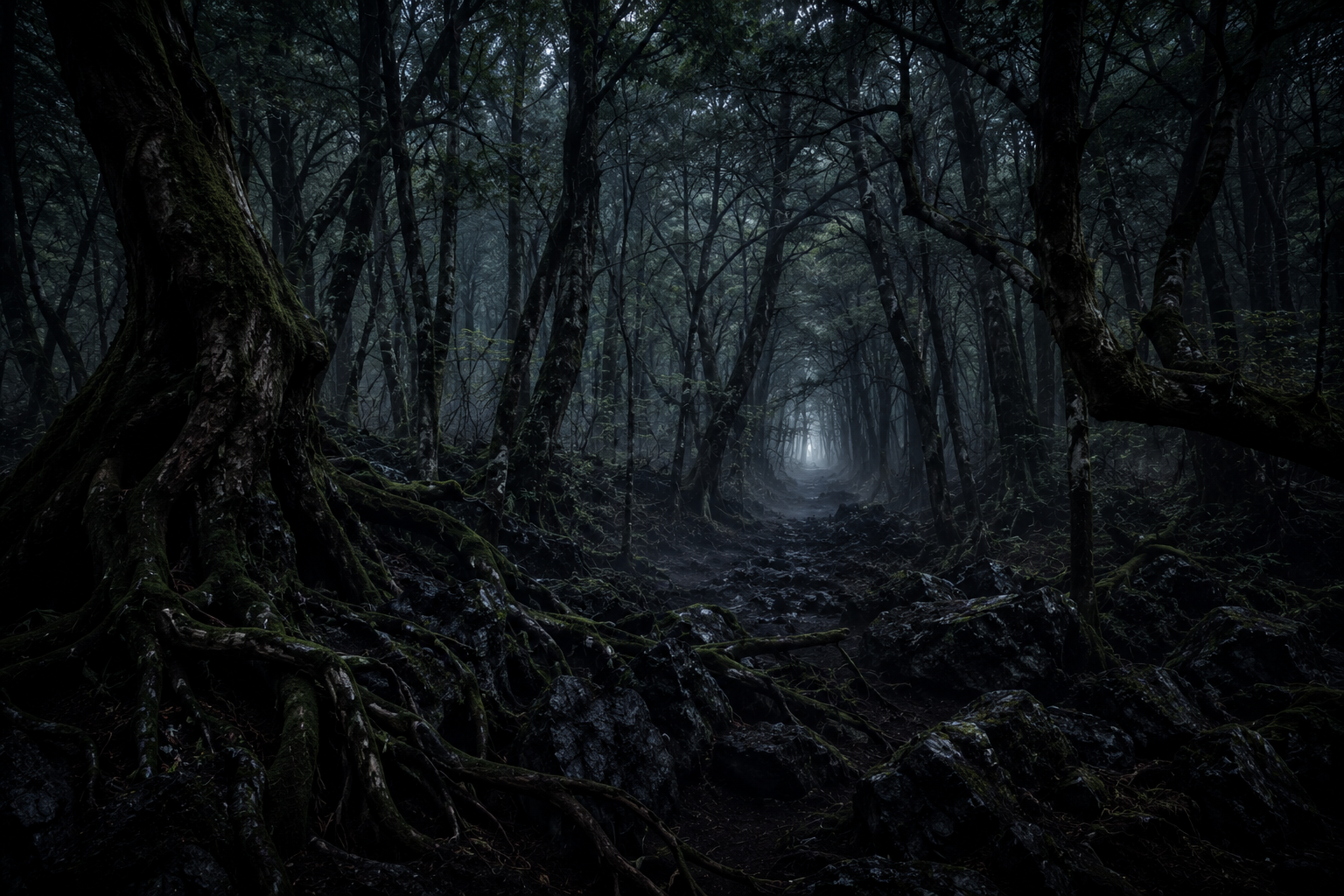
Aokigahara is a dense forest growing across ancient lava flows at the northwestern base of Mount Fuji in Japan. Over many decades, numerous visitors, hikers and people familiar with the forest have reported unusual experiences, including unexplained voices, apparent figures among the trees and sensations of being watched or followed. These accounts are scattered across personal reports, local folklore and later media, making an exact number of witnesses impossible to establish; the witness count given here should therefore be regarded as a conservative estimate. The forest has become closely associated with legends of yūrei — restless spirits traditionally linked to people who died carrying powerful emotions or unresolved attachments. Its unusual volcanic terrain, dense vegetation and extreme isolation contribute to its mysterious reputation, while its later association with numerous deaths further intertwined the real history of Aokigahara with traditional Japanese beliefs about restless spirits.
Additional Notes
Visitors, hikers and people familiar with Aokigahara have reported unsettling experiences including unexplained voices, sensations of being watched and alleged apparitions within the forest. These accounts are closely intertwined with modern folklore, and no reliable total number of witnesses can be established. Stories frequently identify the supposed entities as yūrei — spirits of people believed to have died with unresolved emotions. One frequently repeated legend connects Aokigahara with ubasute, the supposed historical practice of abandoning elderly or infirm relatives in remote wilderness during periods of extreme hardship. Later folklore claims that the spirits of those abandoned became part of the forest's supernatural reputation. However, there is no reliable historical evidence that ubasute was practiced specifically in Aokigahara, and the practice itself is regarded largely as legend rather than a documented custom. Aokigahara's modern association with death developed particularly strongly during the 20th century. Literature and later media reinforced its reputation, while actual suicides within the forest made the connection tragically real. Paranormal folklore subsequently blended these events with traditional Japanese ideas about yūrei — restless spirits associated with violent or emotionally troubled deaths — leading to modern reports of voices, apparitions and sensations of an unseen presence among the trees. Another persistent legend claims that compasses malfunction inside Aokigahara because of magnetic minerals in the volcanic rock beneath the forest. The story has a genuine geological basis: some of the basaltic lava can influence a compass when the instrument is held very close to the ground. However, compasses used normally generally continue to function. The forest's dense vegetation, uneven lava terrain and lack of obvious landmarks are much more significant causes of disorientation.
The Location Today
Aokigahara remains a forest at the foot of Mount Fuji. Its marked paths and designated visitor areas should be distinguished from restricted or hazardous off-trail terrain.
- Environment
- Forest
- Time of Day
- Various
- Evidence Level
- Folklore
- Visiting the Location
- Unknown
- Ownership of the Location
- Unknown