
Summary
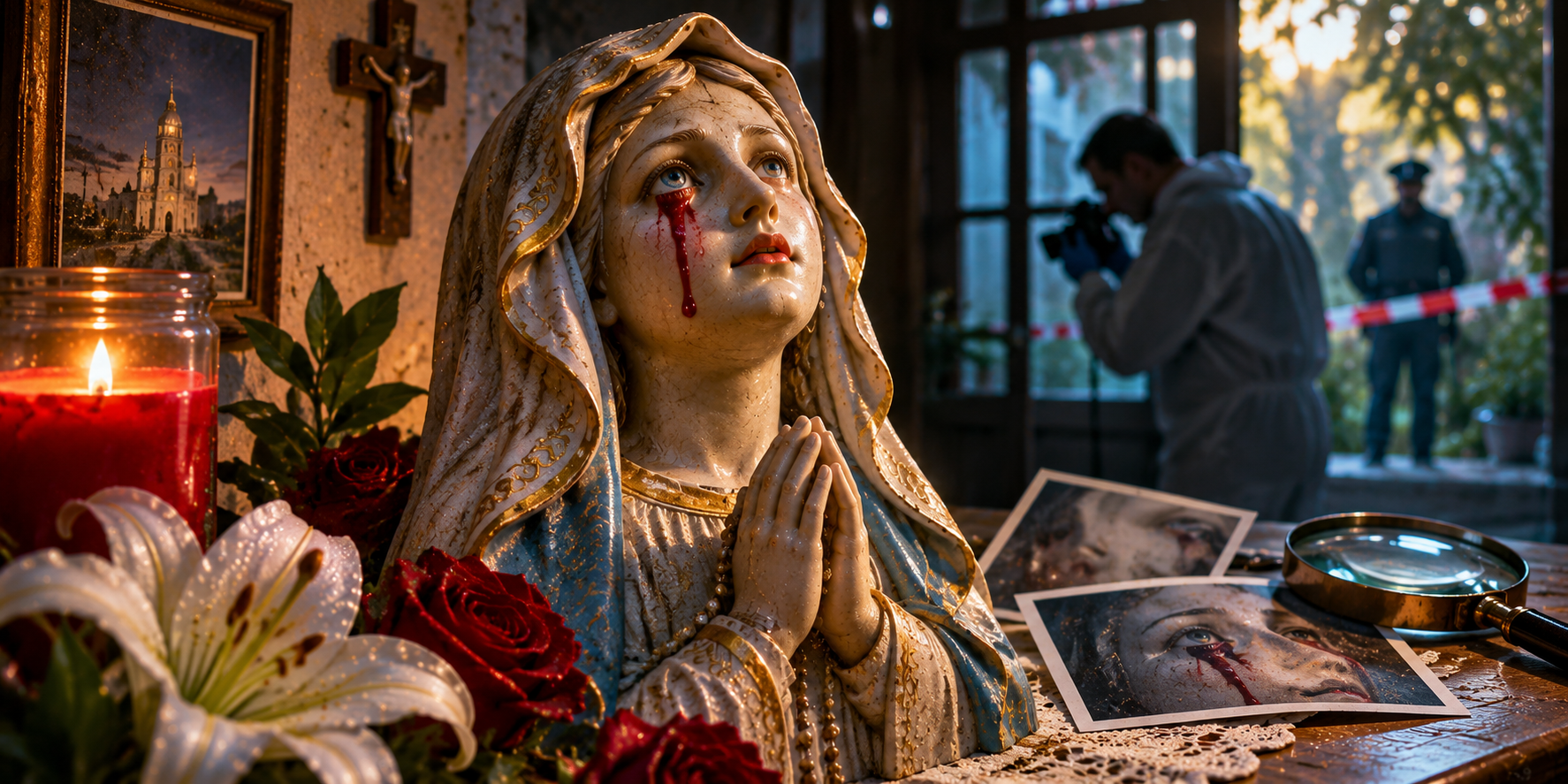
On February 2, 1995, five-year-old Jessica Gregori reportedly discovered red tears running down the face of a small Virgin Mary statue in her family's garden near Civitavecchia, Italy. Over the following weeks, witnesses described further episodes of bleeding, attracting crowds, journalists and investigators. Laboratory tests identified the reddish substance as human blood of male origin, intensifying questions about its source. Initially sceptical, Bishop Girolamo Grillo later claimed to witness the statue bleeding while holding it himself. Judicial authorities investigated possible fraud, while religious and sceptical observers reached sharply different conclusions. The mystery surrounding the Madonna's blood tears remains controversial.
Additional Notes
On February 2, 1995, an unusual discovery in a family garden near the Italian port city of Civitavecchia sparked a controversy that would reach the courts, scientific laboratories and the Catholic Church. Five-year-old Jessica Gregori reportedly noticed red liquid running down the face of a small plaster statue of the Virgin Mary. Her father, Fabio Gregori, also observed the stains. The statue, depicting Our Lady Queen of Peace, had been purchased in Medjugorje in September 1994 by local priest Don Pablo Martín and given to the family. According to witnesses, the phenomenon continued over the following days. Some described seeing fresh red tears appear and move down the statue's cheeks. Photographs were taken, and growing crowds gathered at the Gregori home. In total, 14 episodes were reported between February 2 and March 15, 1995. The local bishop, Girolamo Grillo, was initially deeply sceptical. However, on March 15, while the statue was being kept at his residence, he claimed that it began bleeding again as he held it during prayer. This alleged final episode dramatically changed his position. Laboratory examinations identified the red substance as human blood, with genetic testing indicating a male source. These findings attracted particular attention because the image represented the Virgin Mary. However, identifying the substance did not establish how it reached the statue. Italian judicial authorities investigated whether the reported phenomenon involved deliberate deception. Magistrate Antonio Albano ordered the statue secured while further examinations were considered. The possibility of comparing the blood with DNA samples from male members of the Gregori family became a major point of dispute. Sceptical investigators, including Massimo Polidoro of CICAP, questioned whether the reported bleeding had ever been observed under sufficiently controlled conditions. They also pointed to photographs in which the bloodstains appeared unchanged and argued that human intervention could not be excluded. A church-appointed theological commission collected testimony from 40 witnesses and examined the available evidence. The statue was eventually placed in the Church of Sant'Agostino in Pantano, where it became the focus of pilgrimages. The case remains disputed. The presence of human blood was reported through laboratory testing, but neither the reported observations nor the scientific examinations independently established a miraculous origin. For believers, the statue represents an extraordinary religious sign; for sceptics, unanswered questions about the handling of the statue and the source of the blood remain central.
The Location Today
The original statue is displayed in the Church of Sant'Agostino in Pantano, where it has been venerated since June 17, 1995. According to the municipality, the church is open to visitors and admission is free (Via Ugo Fontanatetta 9, 00053 Civitavecchia, Italy). But as far as documented, the Madonna of Civitavecchia has not bled again since March 15, 1995.
- Environment
- Residential Area
- Time of Day
- Afternoon / Evening / Morning (multiple incidents)
- Evidence Level
- Investigated Case
- Visiting the Location
- Free Access
- Ownership of the Location
- Private